
Israr Ahmed
Nov 26, 2025 • 8 min read
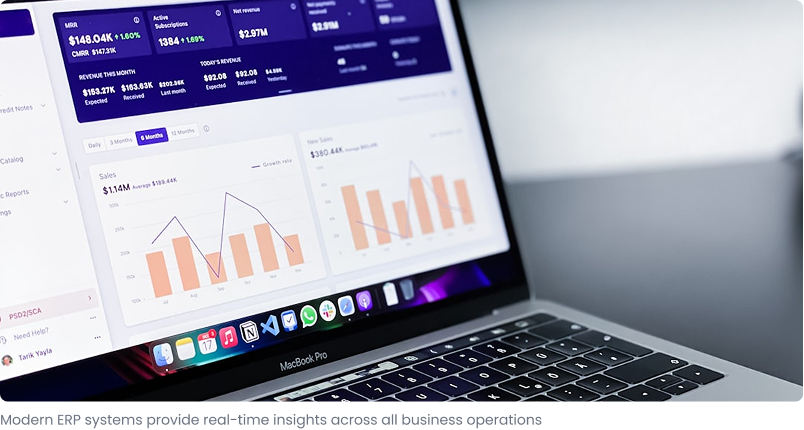
Discover the full range of ERP features and capabilities, including core modules, automation tools, analytics, integrations, and the strategic value they unlock for growing businesses.
An Enterprise Resource Planning (ERP) platform unites finance, sales, HR, projects, inventory, and supply chain data on a single integrated system. When every department works from the same source of truth, organizations gain tighter controls, sharper visibility, and the confidence to scale without losing operational discipline. This guide outlines the core features inside modern ERP suites along with the broader capabilities that turn those features into business value.
From finance to field operations, ERP modules cover the full business lifecycle. Each module below highlights the functions teams rely on every day.
Centralizes general ledger, AP/AR, budgeting, expense control, and regulatory reporting so leaders always see accurate numbers and can automate reconciliations or invoicing.
Tracks leads through fulfillment, synchronizes with inventory, and automates quoting, billing, and customer updates for faster, error-free orders.
Monitors stock levels, locations, and movements in real time, helping teams forecast demand, prevent stockouts, and optimize warehouse space.
Streamlines vendor onboarding, purchase orders, approvals, and supplier performance tracking to control spend and keep materials flowing on time.
Handles hiring, onboarding, attendance, leave, performance, and compliance with automated workflows to keep employee data accurate and actionable.
Plans material requirements, production schedules, and capacity so manufacturing teams always have the right resources without excess cost or downtime.
Combines task assignments, milestones, budgets, and utilization tracking in one workspace to keep delivery aligned to scope and margin expectations.
Centralizes every interaction, automates follow-ups, and gives revenue teams a 360° view of leads, deals, and support so experiences stay consistent.
Automates time tracking, payroll calculations, deductions, tax filings, and statutory compliance, reducing manual work and payroll errors.
Creates dashboards, KPIs, and scheduled reports that pull data from every module to power better forecasting and faster decision-making.
Enforces approvals, segregation of duties, audit trails, and policy adherence so every process is traceable and aligned with regulations.
Coordinates shop-floor schedules, quality checks, maintenance, and resource allocation to keep throughput high with minimal waste.
Helps teams plan campaigns, segment audiences, automate outreach, and track responses so marketing stays tied to revenue outcomes.
Consolidates contracts, scorecards, and communications, making it easier to evaluate suppliers and secure the right pricing or SLAs.
Stores contracts, SOPs, and project files with version control and permissions, reducing paper trails and accelerating audits.
Automates order capture through shipment tracking and invoicing while syncing finance, logistics, and inventory teams on the same timeline.
Features become transformative when they deliver automation, insight, and governance at scale. These capabilities show how modern ERP solutions translate functionality into strategic advantages.
Removes manual steps across finance, HR, procurement, and supply chain so teams focus on strategy instead of data entry.
Gives every department live dashboards and alerts, enabling immediate course corrections and better customer responses.
Transforms operational data into KPIs, trends, and forecasts that keep leadership aligned on performance.
Connects disparate tools into a single platform, eliminating duplicate records and siloed workflows.
Uses machine learning to forecast demand, detect anomalies, and suggest next-best actions before issues arise.
Offers configurable dashboards and visuals that translate complex operations into executive-ready insights.
Delivers end-to-end traceability for inventory, orders, and projects so bottlenecks are easy to spot and solve.
Maintains a single source of truth that simplifies audits, accelerates collaboration, and protects data integrity.
Aligns departments with shared workflows, notifications, and comments inside the same ERP workspace.
Supports new entities, plants, or markets without rebuilding processes, keeping growth predictable.
Bakes approvals, policies, and audit trails into day-to-day work, reducing risk exposure.
Implementing ERP is a strategic move toward automation, resilience, and intelligent decision-making. By matching the right feature set to your operating model, you can replace fragmented tools with coordinated workflows and proactive insights.
The most successful teams treat ERP as an evolving platform: start with immediate needs, expand into advanced analytics and AI, and keep tightening governance as you scale. That approach turns data into intelligence, repetitive work into automation, and disconnected departments into a unified, high-performing organization.


Israr Ahmed
Product Strategist at SA Systems
Israr guides organizations through ERP discovery, implementation, and adoption journeys with an automation-first mindset.
 ERP
ERPMay 12, 2025
 ERP
ERPMay 05, 2025
.png) ERP
ERPMay 18, 2025
.png) Finance and Accounting
Finance and AccountingMay 22, 2025